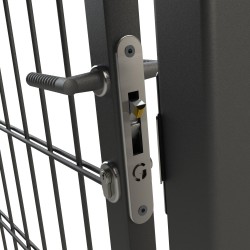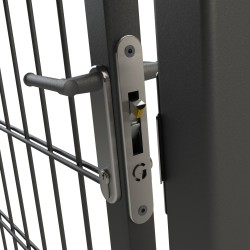


Mortice Lock
Frame: 40mm, 50mm, 30mm
Price:£55.40
A mortice or insert lock sits inside the gate frame, giving the gate a neat finish with the lock body largely out of sight. If you are replacing one, the easiest route is usually the same model and size. For a new gate, choose how it should latch or lock, then allow for the lock and its receiving keep when the frame is made.
This range includes individual lock bodies as well as housings and more complete sets. Ask us to help you find the right combination if you are unsure which parts you need.


| What you want | Consider | How it works |
|---|---|---|
| A gate that catches when it closes | Mortice latch | The latch meets its keep as the gate closes; check how it opens from each side. |
| Key-operated locking | Mortice deadlock | The key throws the bolt to lock the gate. |
| Everyday latching plus key locking | Mortice latch deadlock | A latch holds the closed gate, and a separate deadbolt can be operated with the key. |
| A hook that engages the receiver | Mortice hook lock | Check the matching keep and the way your gate closes. For a sliding gate, start with our sliding-gate locks. |
Mortice describes how the lock fits inside a prepared frame; deadlock describes the key-operated locking action. A mortice lock can be a latch, a deadlock or a combination of both, so choose by how it fits and what you want the gate to do.
Look for the reference on the old lock first. If you cannot find it, send us photographs of its faceplate, body and keep. The useful measurements are the body size, the position of the handle and key cylinder, and the backset—the distance from the front edge of the lock to its operating centre. A similarly named lock can need a different space inside the frame.
For example, Locinox lists FORTYLOCK for profiles of 40 mm or more with a 20 mm backset, and FIFTYLOCK for profiles of 50 mm or more with a 30 mm backset. The number in the name refers to the profile range, not the backset. We can help compare the drawing with your existing gate before you order.
If you already have working handles, a cylinder and a matching keep, an individual lock body may be all you need. For a new gate, check the listing for those parts; a housing or weld-in box is the space for a lock, not the lock itself. Send us the reference and we can help identify a suitable set or the missing parts.
Choose the lock before the frame is cut or welded so the pocket, holes and keep can be made in the right positions. If you would rather fit a lock to the face of an existing metal frame, explore bolt-on gate locks. If the gate is being built around a welded lock case, see our weld-in lock options.
Email Metalines a clear photo of the existing lock and keep, any reference you can find, and the gate-frame size. We can help narrow down the replacement and the parts to go with it.