


Relay Socket
For: Finder 60.13 relay
Price:£10.38
In Store
Need a gate or barrier to detect a vehicle? Browse wired loop detectors, loop cable and wireless vehicle sensors here. If you are replacing one part, the reference on your existing detector or cable will help you find the right item.
Decide whether a passing vehicle should trigger the gate to open or whether the system needs to know that a vehicle is still present. For detection without cutting a road loop, you can also compare non-contact gate and barrier sensors.




A wired loop in the road connects to an electronic detector. When a vehicle passes over the loop, the detector sends its configured signal to the gate or barrier controller. If you need a complete new installation, check the detector, loop cable and any connection base separately.
Keep the complete reference, such as the full PROCON LD model or the channel and voltage suffix on a PROLOOP unit. A matching case shape or brand is not enough. If you cannot identify the unit, send a label photograph and the gate or barrier control-board reference.
These ranges include different purchases: the detector, the cable laid in the road and connection parts. Examples are the CAME SMA2 detector, FAAC PROLOOP 1, Nice LP22 detector and BFT loop cable. Match the full label, detector supply and number of channels to your installation; the brand name alone does not identify an interchangeable part.
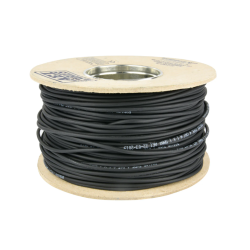
The sensing loop and the connection back to the detector have different roles, even where a manufacturer specifies a continuous cable arrangement. Buy the documented cable type for the intended job, not any wire described as “loop cable”. Check the sale length and whether the listing is a drum, a preformed loop or another component.
For a new installation, the installer must determine loop layout, turns, feeder routing and the effect of nearby metalwork or other loops. A universal “number of turns” or cable length would be misleading without those details. A preformed-loop or armoured-feeder enquiry also needs its own specification and availability check.
A wireless e-Loop may be an alternative to cutting a road loop. Choose the exact model for the job: an exit detector triggers an opening request, while a presence model is designed to indicate that a vehicle remains in place. Check the receiver and installation requirements for the model you order.
AES explains the exit and presence modes on e-Loop V4. Its presence function detects vehicles; pedestrian protection calls for a suitable separate safety arrangement. Check the instructions for the generation you actually have or plan to buy.
Have the detector, loop, connections and system behaviour assessed before buying parts or changing settings. A detector’s sensitivity setting is not a substitute for a suitable installation, and vehicle detection alone does not establish pedestrian protection. Metalines can help identify equipment; we do not carry out site fault-finding.
For the wider equipment choice, see barriers, bollards and parking control.


