How does a vehicle induction loop work?
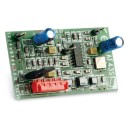
A wired loop in the road connects to an electronic detector. When a vehicle passes over the loop, the detector sends its configured signal to the gate or barrier controller. If you need a complete new installation, check the detector, loop cable and any connection base separately.
Which loop detector should I choose?
- What should it do? Choose an opening pulse or a continuing vehicle-presence signal to suit the gate or barrier control.
- How many loops? Match the number of loop inputs. If you need directional detection, choose a model and setup that specifically support it.
- How will it connect? Match the supply voltage, base or connector and output to the controller.
- Using an existing loop? Check its cable and feeder against the replacement detector's requirements.
Keep the complete reference, such as the full PROCON LD model or the channel and voltage suffix on a PROLOOP unit. A matching case shape or brand is not enough. If you cannot identify the unit, send a label photograph and the gate or barrier control-board reference.
Looking for a CAME, FAAC, BFT or Nice loop product?
These ranges include different purchases: the detector, the cable laid in the road and connection parts. Examples are the CAME SMA2 detector, FAAC PROLOOP 1, Nice LP22 detector and BFT loop cable. Match the full label, detector supply and number of channels to your installation; the brand name alone does not identify an interchangeable part.
Is loop cable the same as feeder cable?
The sensing loop and the connection back to the detector have different roles, even where a manufacturer specifies a continuous cable arrangement. Buy the documented cable type for the intended job, not any wire described as “loop cable”. Check the sale length and whether the listing is a drum, a preformed loop or another component.
For a new installation, the installer must determine loop layout, turns, feeder routing and the effect of nearby metalwork or other loops. A universal “number of turns” or cable length would be misleading without those details. A preformed-loop or armoured-feeder enquiry also needs its own specification and availability check.
Can I use a wireless e-Loop instead?
A wireless e-Loop may be an alternative to cutting a road loop. Choose the exact model for the job: an exit detector triggers an opening request, while a presence model is designed to indicate that a vehicle remains in place. Check the receiver and installation requirements for the model you order.
AES explains the exit and presence modes on e-Loop V4. Its presence function detects vehicles; pedestrian protection calls for a suitable separate safety arrangement. Check the instructions for the generation you actually have or plan to buy.
What if the gate does not detect a vehicle reliably?
Have the detector, loop, connections and system behaviour assessed before buying parts or changing settings. A detector’s sensitivity setting is not a substitute for a suitable installation, and vehicle detection alone does not establish pedestrian protection. Metalines can help identify equipment; we do not carry out site fault-finding.
For the wider equipment choice, see barriers, bollards and parking control.